
Table of Contents
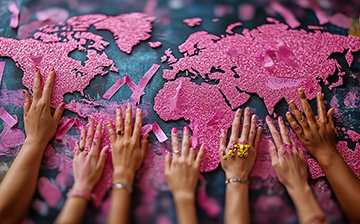
Feminism Across Continents: How Global Movements are Reshaping the Woman Factor



In every corner of the world, women are rising. Their voices, once confined to the quiet chambers of their homes, are now resonating in bustling cities, village squares, and international forums. From the bustling streets of New York to the far-reaching corners of rural Africa, women’s rights movements are transforming societies. In Olugboyega Oyelowo’s The Woman Factor, he explores the multifaceted nature of womanhood and how feminism, in its many forms, has reshaped the global narrative. This comparative analysis provides a profound lens through which to examine the evolution of feminism and the ongoing struggle for gender equality across continents.
The Global Stage: A Changing Landscape
When we think of feminism, it’s easy to imagine it as a singular movement, something defined by the suffragettes of the early 20th century or the bold protests for equal pay. However, feminism is not one-size-fits-all. In fact, a diverse and constantly evolving global conversation has manifested in various ways across different continents. The common thread, however, is the demand for justice, equality, and respect principles that, for too long, have been denied to women.
Each region of the world offers a unique perspective on feminism, shaped by its culture, politics, and history. As Oyelowo points out, the “woman factor” extends beyond the biological role of women as mothers or caregivers; it is a force that drives social, political, and economic transformation worldwide.
Feminism in the West: The Struggle for Political Power
In Western societies, particularly in Europe and North America, feminism has been deeply intertwined with the fight for political power and legal rights. The suffrage movements of the late 19th and early 20th centuries were among the first major waves of feminism to gain global traction. These movements, which demanded women’s right to vote, marked a turning point in the public’s understanding of gender roles.
But it wasn’t just about the right to vote. As feminism evolved in the West, so did the issues it addressed. The second wave in the 1960s and 70s was driven by women’s demands for reproductive rights, workplace equality, and an end to sexual discrimination. The feminist movements of the 20th century sought equality not just in the ballot box, but in the workplace, the home, and the cultural narrative. Women began to demand the freedom to choose their paths, whether in education, employment, or politics, leading to breakthroughs like the inclusion of women in leadership roles, greater access to higher education, and the slow but steady decline of gender pay gaps.
However, while these advancements in the West have been monumental, they have not been without their challenges. Even in the most developed nations, women still face substantial barriers, such as wage inequality, underrepresentation in top corporate and political positions, and the often-invisible burden of unpaid labor. These issues demonstrate that, despite progress, the fight for gender equality is far from over.
Feminism in Africa: A Fight for Survival and Empowerment
On the African continent, the feminist movement often takes a different form. The role of women in Africa has traditionally been linked to community, culture, and survival. In many parts of Africa, women are the backbone of the agricultural economy, ensuring food security, managing households, and bearing the bulk of unpaid labor. Yet despite their central role, women have long faced discrimination in terms of land rights, political participation, and access to education.
In Olugboyega Oyelowo’s The Woman Factor, the dual burden of African women is laid bare. They are tasked not only with economic and domestic labor but also with combating systemic cultural norms that place them at a disadvantage. Oyelowo examines how these norms influence gender roles and how African feminism often involves negotiating power within a context where men have historically held authority. African feminism, often described as “nego-feminism,” is about negotiating space both within the family and within society without outright confrontation.
This form of feminism emphasizes collective action, unity, and the transformation of social structures that have long marginalized women. Through grassroots movements and collective action, women across Africa are creating opportunities for themselves. For instance, women in rural communities have pioneered microfinance initiatives, ensuring economic independence and empowerment. Similarly, African women are slowly reclaiming their voices in politics, with leaders like Ellen Johnson Sirleaf of Liberia and Amina J. Mohammed) of Nigeria (Deputy Secretary-General of the United Nations & Chair of the United Nations Sustainable Development Group), breaking barriers and inspiring a generation of young women to pursue leadership roles.
Feminism in Asia: Tradition Meets Change
In Asia, feminism faces a particularly complex intersection of tradition, religion, and modernity. In countries like India, China, and Japan, the role of women has historically been shaped by religious beliefs, cultural traditions, and patriarchal systems that dictate women’s roles within the family and society. However, these age-old expectations are being challenged as more women take up the mantle of social reform and political leadership. (Japan just elected the country’s first Female prime Minister) and Nigeria’s Okonjo-Iweala was the first Nigerian woman to serve two terms as Finance Minister of Nigeria and served as the seventh director general of the World Trade Organization (WTO) from 2021.
In India, the feminist movement has seen remarkable shifts in recent years, as women have fought for their rights against a backdrop of gender-based violence and societal norms that often restrict their autonomy. From the rise of female political leaders to the growth of feminist collectives fighting for the right to education, the Indian feminist movement is diverse and dynamic. Women like Priyanka Chopra and Malala Yousafzai are symbols of how young women can utilize their platforms to challenge the status quo and redefine what it means to be a woman in their respective cultures.
In China, the feminist movement has had to contend with the Communist Party’s policies and traditional Confucian values, which place a great emphasis on women’s roles as mothers and wives. Despite these challenges, Chinese feminism has seen a resurgence in the 21st century, particularly with the rise of digital platforms where young women are organizing, sharing experiences, and pushing back against traditional gender expectations.
Feminism in the Middle East: Reclaiming Religious and Cultural Identity
In the Middle East, feminism has often been framed as a struggle against oppressive political regimes and patriarchal interpretations of religion. Women in countries like Saudi Arabia, Iran, and Egypt have long faced systemic legal and social barriers that limit their freedoms. However, feminist movements in the region have been remarkably resilient. In many cases, they have not only fought for women’s rights within a secular context but have also used religious frameworks to advocate for gender equality.
Saudi women, for example, have been at the forefront of fighting for their right to drive, a victory that reflects the broader battle for women’s rights in the country. In Iran, women have used the power of civil disobedience to challenge laws around dress codes and public behavior. The feminist movements in these regions are deeply connected to both local traditions and global human rights campaigns, proving that feminism is not a foreign imposition but a universal demand for justice.
A Global Impact: Women Supporting Women
Across all continents, one thing is clear: feminism has become a global force for change. From the #MeToo movement in the United States to the feminist rallies in Brazil, women are organizing across borders, advocating for a shared vision of equality and freedom. The solidarity among women’s movements has never been stronger, and the connections between local struggles and global impacts are evident. The collective power of women today is undeniable. What happens in one part of the world often resonates in others.
In conclusion, The Woman Factor challenges us to rethink feminism not as a singular movement but as a global phenomenon with local flavors. Feminism is a fight for equality, but it’s also a fight for the right to define womanhood on one’s own terms. Whether in Africa, Asia, the Middle East, or the West, the woman factor is reshaping the world in profound ways, and the journey toward equality is just beginning. Women across the globe are not waiting for change; they are creating it. In addition, in doing so, they are reshaping the very fabric of society for generations to come.